100% vegan, non - toxic, and sterilized
Trusted by numerous artists
When you decide to leave a permanent design on your skin, your research might focus on the artist’s style, the meaning of the design, or even the courage to endure pain.
But have you ever paused to consider: what are the tattoo inks that make this art? Will they remain safely under your skin forever?
Beneath the glamorous surface of tattoo art lies a frequently overlooked yet crucial aspect: ingredient safety. This is not meant to incite fear but to empower you. As a smart consumer and the primary guardian of your health, understanding what enters your body is your most important right when making this permanent decision.
Today, we focus not on artistic style but on science, safety, and how to ensure your own protection.

Tattooing essentially involves embedding exogenous pigments into the dermis via needles. Your immune system recognizes these “intruders” and sends cells, primarily macrophages, to engulf and remove them.
However, pigment particles are usually stable and small enough that these cells cannot fully digest them. They remain in place with the pigment, forming the permanent design we see.
This means the ingredients in tattoo ink coexist long-term with your body’s immune system. Their biocompatibility—the degree to which they are body-friendly and non-reactive—directly impacts the long-term health of your tattoo.
Low-quality inks may cause acute issues such as allergies, infections, or severe inflammation, and chronic problems such as pigment migration, excessive fading, or granulomas (small inflammatory nodules) over time.
Therefore, paying attention to ink ingredients is not being picky—it is the most basic and rational investment in your own health.
A bottle of tattoo ink is far more than “pigment.” It is a complex formulation system, mainly consisting of two components:
These provide the color and can be:
This liquid medium carries the pigment, allowing it to pass through the needle smoothly and deposit evenly into the skin. Typical ingredients include:
The key issue often lies not in these base components themselves, but in purity, source, and contamination control during production. Cheap inks may use industrial rather than cosmetic/medical-grade pigments, contain heavy metal contaminants (arsenic, lead, cadmium), or use azo dyes that may be carcinogenic.
While regulations vary by country, as a consumer you can proactively ask your tattoo artist to avoid certain known high-risk components:

You don’t need to be a chemist, but you can learn to observe and ask questions. A practical checklist for evaluating tattoo ink safety:
A professional ink built on safety integrates these elements. You might see claims like
“Full sterilization production, no animal ingredients, 100% vegan formulation,” clearly marked as Vegan | Non-toxic | Sterilized.
These statements turn safety from vague marketing language into tangible, verifiable assurance.
Choosing a tattoo artist is not only about style but also about trusting a health partner. A candid conversation about ink safety builds this trust. You can politely but firmly ask:
A professional and responsible artist will appreciate these questions. It shows you take the process seriously, and they will gladly explain their choice—whether for stable color, ease of use, pure pigments, or safety and long-lasting results.
If an artist is impatient or evasive about your safety concerns, that in itself is a red flag.
Q: I have sensitive skin/allergies. How can I ensure ink safety before tattooing?
A: Take this seriously. Disclose your full allergy history during consultation. Ask to see the ink ingredient list. The most effective method is a patch test. The tattooist injects a small amount of ink into an inconspicuous area (behind the ear, inner thigh) and observes for 24–48 hours or longer for redness, swelling, or itchiness. This does not guarantee 100% safety during tattooing but greatly reduces risk.
Q: If the ink packaging says “Non-toxic,” is it completely safe to use?
A: Not entirely. “Non-toxic” typically means the product meets relevant safety regulations and does not intentionally contain substances with known acute or chronic hazards (heavy metals, specific carcinogenic dyes). It is an important safety declaration, but not medical-grade assurance. Individual allergies or sensitivities may still occur. Therefore, “non-toxic” is a basic requirement but should be combined with brand reputation, production standards, and artist skill to form a complete “safety triangle.”
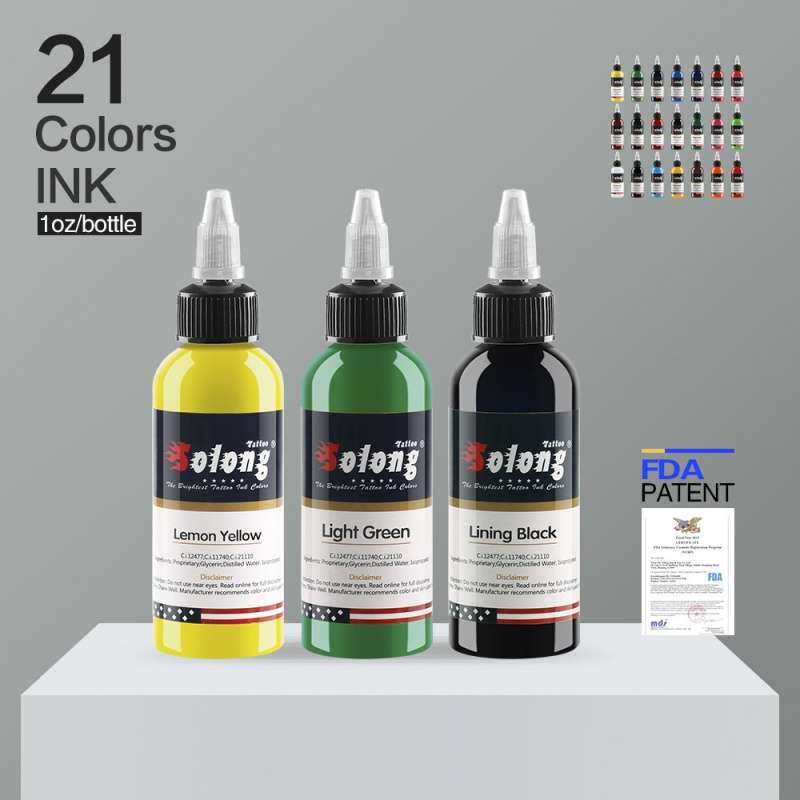
Getting a beautiful tattoo should be a process full of anticipation and positive experience, not a gamble with unknown health risks. Understanding tattoo ink safety is an exercise in bodily autonomy and forms the foundation of a true partnership with a professional tattoo artist.
When the artist’s skill meets high-quality, transparent, and safe ink, you gain not just a work of art on your skin, but a lifelong, worry-free confidence.
Your skin deserves the most beautiful story, and every remarkable story should begin from a safe, informed starting point. Before letting any ink enter your skin, empower yourself with knowledge. This is the most important step in your permanent journey.
No account yet?
Create an Account