100% vegan, non - toxic, and sterilized
Trusted by numerous artists
Standing in front of shelves filled with tattoo inks, or facing countless color options on a screen, that mix of excitement and confusion is something every beginner tattoo artist has experienced.
You want to own everything, to create with every color, but budget and reality always remind you: it’s time to make a smart choice.
Purchasing your first real set of tattoo inks marks a serious step from practice skin to real human skin.
This is not merely adding tools but laying the foundation for your future artistic style.
A wrong choice can lead to wasted money, limited creativity, and even affect client confidence; a wise investment, on the other hand, opens a door, allowing you to explore your personal style while building an efficient and professional workflow.
Today, we’ll talk about how to build your first professional color toolbox.
This has nothing to do with blind collecting but everything to do with strategic planning.

Before telling you what to buy, let’s first look at the pitfalls most beginners fall into.
Recognizing these can save you a great deal of tuition.
The key to avoiding these traps is to think like an artist and plan like a project manager.
Your first set of tattoo inks should be a reliable map of your creative territory, not a pile of random scenic postcards.
Put aside the dazzling color wheel.
A powerful color toolbox begins with the most fundamental building blocks.
In art school, this is called limited palette training, which forces you to understand color relationships—the very core skill of tattoo color mixing.
Your initial investment should focus tightly on the following essentials:
This is the anchor of your toolbox.
Almost every tattoo relies on it, whether for outlines, shading, or supporting color designs.
Choosing a black tattoo ink with rich pigment, stable flow, and the ability to handle both sharp lines and smooth shading is one of the most important decisions you will make.
It should be the ink you trust and understand better than any other.
Namely magenta (bright red), cyan (gem blue), and lemon yellow.
In theory, these three colors can be mixed to create most of the visible spectrum.
Investing in primary colors with pure saturation and stable pigment is equivalent to buying a potentially infinite palette.
Beyond pure art theory, several colors are used so frequently in tattoo practice that buying them pre-mixed greatly improves efficiency.
With these core colors, you already have the ability to complete the vast majority of traditional, black-and-gray, and basic color tattoo designs.

After understanding the core palette, a practical question arises: should you buy individual bottles or invest directly in a designed tattoo ink set?
For beginners, a thoughtfully curated set is often the optimal solution.
A beginner set containing 21 colors—from pure black and bright white to primary colors, commonly used secondary colors, and multiple brown tones—provides an ideal laboratory.
Each 30 ml bottle offers a perfect balance: not so little that you need constant restocking, and not so much that it goes to waste.
You can systematically practice mixing, validate color theory, and understand how each color heals on skin.
These sets are designed to be a tattoo artist’s “first professional color palette.”
They emphasize color stability, ease of use, and pure tones, and clearly state that the inks can be perfectly mixed with other premixed washes.
At this point in your journey, a carefully designed, comprehensive, and reliable starter set becomes the most efficient way to establish a solid color foundation.
Q: Should I spend my entire starting budget on buying many colors, or focus on black and a few main colors first?
A: Strongly recommend a “core-first” strategy.
Allocate a larger portion of your initial budget to one truly high-quality black ink and the basic red, yellow, blue, and white.
After that, expand efficiently with a basic color set.
Always remember: quality outweighs quantity, especially for products that go directly into skin.
Q: How can I tell if a color set is truly suitable for beginners like me?
A: Look for several key points.
First, check whether it includes the core palette—black, white, primary colors, and browns.
Second, review whether the description emphasizes beginner-friendliness, such as “easy to use,” “pure colors,” and “easy to mix.”
Finally, reference community reviews from other beginners or apprentices.
A set proven by many newcomers to help them pass the startup phase smoothly is usually a safe and wise choice.
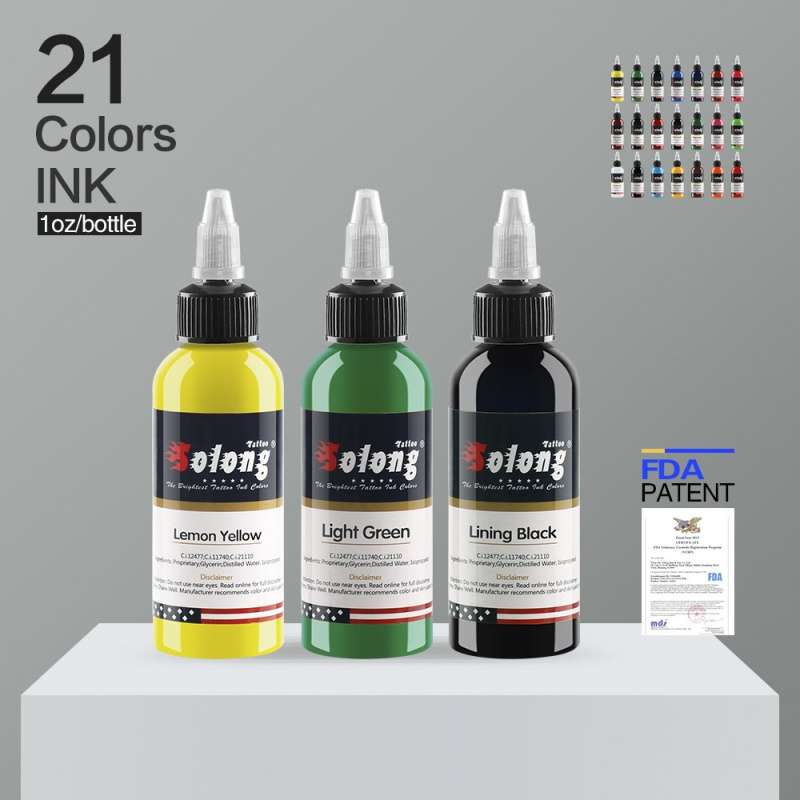
Taking the first step toward building your own professional tattoo ink collection requires strategy, not impulse.
It is an investment in your craft and in your future clients.
A carefully designed, comprehensive, and reliable starter set removes most tool-related doubts from your early path, allowing you to focus on refining technique, understanding skin, and developing your personal style.
It eliminates the anxiety of “How should I mix this color?” and replaces it with the freedom of “I can confidently try this blend.”
When your tools are trustworthy, your confidence grows with them.
Your first colors should be solid, reliable partners that inspire your creative journey—not problems that constantly demand solutions.
So take a deep breath, let go of the obsession with “owning everything,” and pursue “owning the right things.”
Choose a toolbox that lays a solid color foundation, then pick up the machine and begin your truly exciting creative journey.
Your first color kingdom is waiting to be built with the smartest first stroke.
No account yet?
Create an Account