100% vegan, non - toxic, and sterilized
Trusted by numerous artists
Have you ever wondered why some tattoo inks allow artists to work with effortless fluidity, as if the needle were dancing on the skin, while others make the process sluggish and full of unpredictability?
The mystery often lies not in how vibrant the color is, but in a key attribute that cannot be seen or touched, yet is deeply felt with every single stroke—flow.
For professional tattoo artists, the flow of tattoo ink is like a painter’s brush feel or a musician’s instrument response. It directly determines the smoothness with which ink travels to the needle tip, how it settles within the layers of skin, and ultimately the sharpness of lines and the softness of shading.
Today, we’ll take a deep dive into this invisible backbone that supports every perfect tattoo masterpiece.
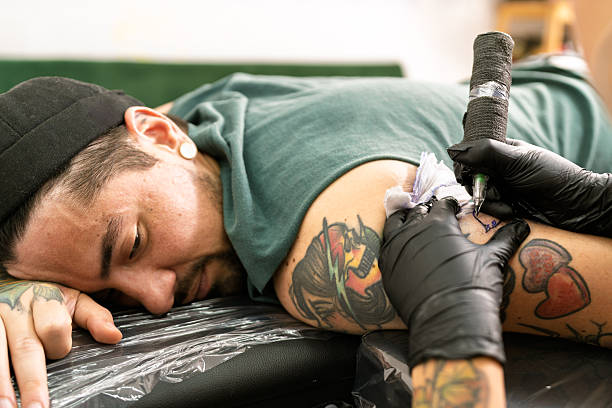
When people talk about tattoo ink flow, they often simplify it as “thin” or “thick.” But this barely scratches the surface.
True flow is a complex physical property, primarily shaped by the combined effects of viscosity and surface tension.
You can imagine ideal tattoo ink as high-quality maple syrup: it’s heavy enough to carry rich pigment particles without running uncontrollably like water, yet smooth enough to pour evenly and spread gracefully over pancakes.
In tattooing, this balance means the ink flows steadily through the needle grouping without being so thin that it blows out or spreads, and without being so thick that it clogs needles or causes uneven saturation.
A tattoo ink with excellent flow allows artists to maintain stable, continuous output when pulling ultra-fine single-needle lines, ensuring sharp clarity from start to finish.
At the same time, when filling large areas or creating smooth smoky gradients, it delivers even pigment coverage, achieving silky transitions and avoiding patchiness or the dreaded “metallic scraping” effect.
So how do high-quality tattoo inks achieve this ideal flow?
The answer lies in precise scientific formulation and manufacturing processes.
First, pigment particle size and distribution are critical. Particles that are too large or irregular are prone to settling or clumping, disrupting flow consistency.
Premium inks use finely milled pigments with concentrated particle-size distribution, ensuring they remain stably suspended in the solution over time.
Second, the formulation of the carrier solution—the liquid medium that holds the pigments—is the core technology.
Its viscosity and surface tension must be precisely tuned: strong enough to suspend pigments, yet responsive enough to release them accurately at the correct depth in the dermis the moment the needle penetrates the skin.
This involves complex ratios of glycerin, alcohol, water, and other proprietary components—the closely guarded expertise of each brand.
In addition, homogenization during production is essential.
High-speed shear or homogenization techniques ensure that every drop of ink is fully integrated, preventing separation or clumping and guaranteeing consistent performance from the first stroke to the last.
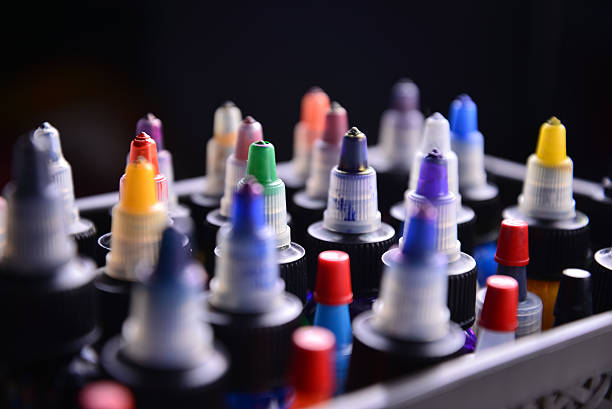
The best way to understand the importance of flow is to see how directly it affects the final tattoo outcome.
Ink with excessive flow can spread under the skin, causing blurry edges and loss of sharpness—especially problematic for intricate geometry or fine lettering.
In contrast, inks with stable, smooth flow deliver pinpoint precision.
For example, a black tattoo ink designed specifically for lines and shading, with a “smooth and stable texture,” ensures even ink delivery during needle movement, producing crisp, powerful lines with clean boundaries.
Perfect shading requires ink to layer gently and evenly.
Poor-flow inks may result in uneven saturation and patchy gradients.
An ideal ink allows seamless transitions from dark to light, creating natural, soft gradients with ease.
Overly viscous ink may cause more trauma to the skin, as artists need to apply more pressure or multiple passes to implant pigment.
Ink with excellent flow colors efficiently, potentially reducing repeated stimulation and supporting better healing.
When ink flow is fully under control, artists can focus on design, hand speed, and client communication—rather than battling uncooperative ink.
This smooth experience directly enhances creative freedom and final artwork quality.
At this point, if you want to experience what truly balanced flow feels like in real-world tattooing, you may want to explore inks engineered specifically for professional performance: Discover professional tattoo inks with precision-tuned flow
There is no universal formula for choosing the perfect ink flow.
It depends closely on your machine type—coil machines often prefer slightly thicker inks, while rotary machines are more forgiving—as well as your hand speed and personal feel.
However, several general principles can help guide your decision:
Q: If my ink feels too thick, can I dilute it myself with water?
A: Strongly not recommended. Adding distilled water or other liquids disrupts the ink’s original chemical balance, potentially affecting pigment stability, safety, and healing results. If you need different consistencies, it’s better to use dedicated wash solutions or product lines designed with varying flow.
Q: Does good flow mean ink is more likely to blur or fade?
A: Quite the opposite. Excellent flow comes from precise formulation and is independent from pigment longevity—though both can be optimized simultaneously.
A top-tier tattoo ink can deliver a smooth flow experience while also offering outstanding color retention. Its “long-lasting vibrancy” comes from optimized formulations that keep pigment securely embedded in the dermis over time, without conflicting with flow performance.
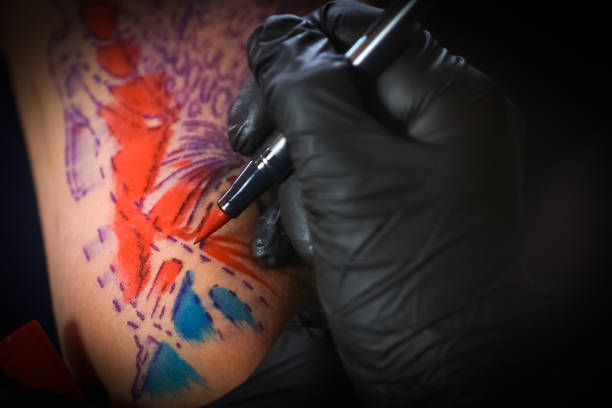
Tattooing is a craft that blends art, skill, and science.
When we talk about tattoo ink, color saturation and safety are undeniably top priorities.
But beneath these visible factors, flow—this hidden performance attribute—is the true foundation that determines whether daily creation feels smooth and whether fine details stand the test of time.
It works silently, yet runs through every moment the needle meets the skin.
Choosing a tattoo ink with carefully calibrated flow is like finding the perfect partner for your most trusted machine.
It transmits your technical intent flawlessly onto the skin, making sharp lines more confident and soft shading more alive.
This isn’t just an upgrade of tools—it’s an investment in your own craft.
Because when every stroke is precise and smooth, there is nothing left between you and your masterpiece.
No account yet?
Create an Account